


Alkali Metals
The alkali metals consist of the chemical elements lithium (Li), sodium (Na), potassium (K), rubidium (Rb), caesium (Cs), and francium (Fr).
Together with hydrogen they constitute group 1, which lies in the s-block of the periodic table. All alkali metals have their outermost electron in an s-orbital: this shared electron configuration results in their having very similar characteristic properties. Indeed, the alkali metals provide the best example of group trends in properties in the periodic table, with elements exhibiting well-characterised homologous behaviour.This family of elements is also known as the lithium family after its leading element. The alkali metals are all shiny, soft, highly reactive metals at standard temperature and pressure and readily lose their outermost electron to form cations with charge +1.
They can all be cut easily with a knife due to their softness, exposing a shiny surface that tarnishes rapidly in air due to oxidation by atmospheric moisture and oxygen (and in the case of lithium, nitrogen). Because of their high reactivity, they must be stored under oil to prevent reaction with air, and are found naturally only in salts and never as the free elements. Caesium, the fifth alkali metal, is the most reactive of all the metals. All the alkali metals react with water, with the heavier alkali metals reacting more vigorously than the lighter ones.


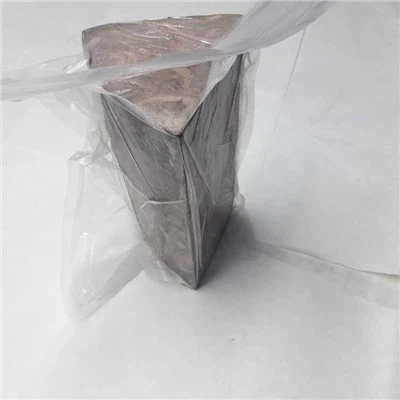


Product Categories


Advantages of Alkali Metals
Atomic radii
In the periodic table, the atomic radii of elements decreases as we move from left to right in a row while in a column the atomic radii increases as we move from top to bottom. Hence atomic radii of alkaline earth metals increase down the column also when compared with alkali metals the size of alkaline earth metals are smaller because the nuclear charge of these elements is more than alkali metals.
Ionization energy
Ionization energy or ionization enthalpy is the minimum amount of energy needed to remove electrons from the energy shells of an atom. Alkaline earth metals have low ionization energies because atoms of alkaline earth metals have a big size due to which it is difficult to take out electrons from the energy shell. The trend of ionization energies is opposite to atomic radii so ionization energies decrease as we move down the group.
Electronegativity
Whenever an atom of an element forms a bond with an atom of some other element by sharing electron pairs then every atom tries to attract shared electron pair towards itself, this tends to attract shared pair of electrons is known as electronegativity. Electronegativity of alkaline earth metals decreases down the group.
Hydration energy
Hydration energy is the amount of energy released on the hydration of one mole of ions. Hydration energy of alkaline earth metals follows the opposite trend as that of atomic size means hydration enthalpy of ions decreases down the group as atomic size increases.
Our factory
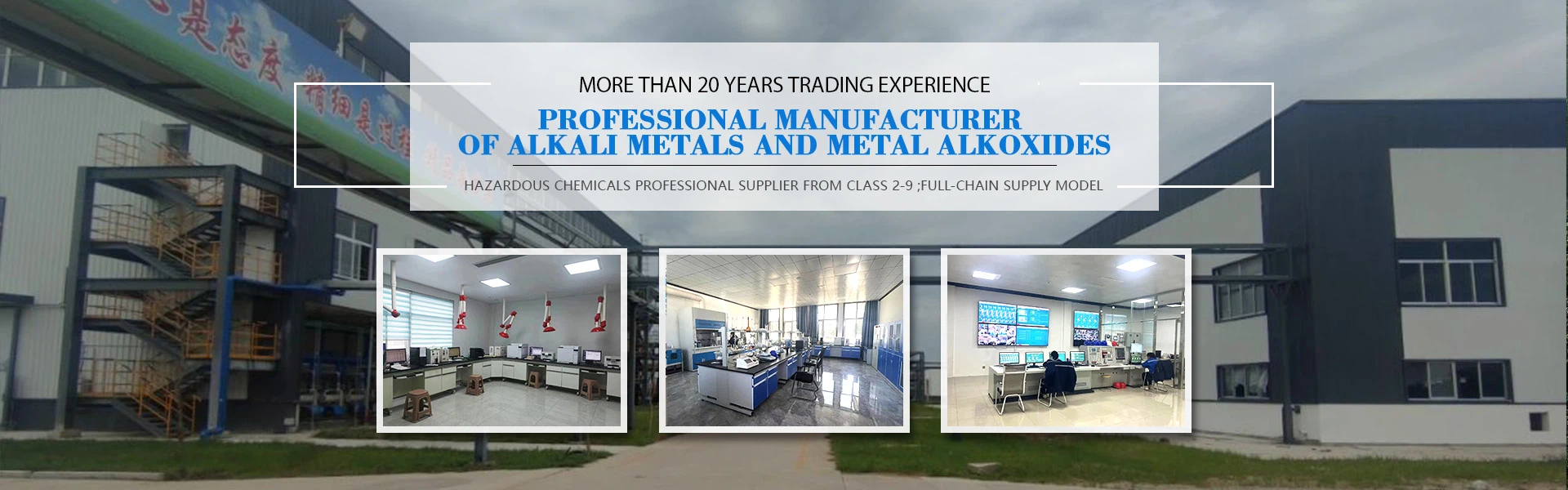
Jinan Hong Sendi New Materials Co., Ltd. is located in Jinan. The company was founded in 2019 and is a modern chemical enterprise integrating research and development, production, and sales. The company's production bases are located in Jining and Weifang, Shandong Province.
Our product
The company specializes in customized production of pharmaceutical intermediates, pesticide intermediates, liquid crystal intermediates, and some raw materials. The alcohol sodium and alcohol potassium series are the company's main products, and they are the leading enterprises in the same industry in China. These products are widely used in the production of COVID-19 special drugs, vitamins, sulfonamides, antivirals, anticancer, and anti-AIDS drugs, as well as in the organic synthesis of low-toxic, long-lasting chemical herbicides, insecticides, fungicides, and growth regulators.
Research and development
The company's research and development center has strong research and innovation capabilities in process development and process optimization. There are three doctoral students and five master's students. The company also collaborates with more than ten universities and research institutes, such as Shandong University, Nankai University, and Moscow State University, and has embarked on a path of combined development of "production, study, and research," injecting vitality into the company's rapid development.
Our service
We provide quality and efficient services with a customer-centric business philosophy. The company has always been committed to providing strong and timely technical support, good and perfect services, and strives to win the best reputation in the customer and market.
Trends in Physical Properties of Alkali Metals
Atomic and ionic radii of elements
Atomic and ionic radii of elements increase as you go down the column. Also, every alkali metal has the largest radii than any other element in the corresponding period. Alkali metals readily lose an electron and become cationic. The cationic radius is smaller than the neutral atom. The relative ionic radii also increase down the column.
The density of alkali metals
Having the largest radius and volume, alkali elements have the lowest density. So, they are very soft and can be cut with a knife. Lithium, sodium and potassium are lighter than water. Potassium has the lowest density among alkali metals.
Electropositive metallic character and ionization energy
Alkali metals will donate a single valence electron to get a noble gas configuration. Thus, they are all univalent electropositive metals. The ionization energy needed for the removal of the valence electron will be highest for the small lithium atom. With increasing atomic size, the valence electron gets shielded by the inner electrons and becomes easily removable with less energy requirement. Hence, the ionization energy decreases with an increasing atomic number.
Solubility or hydration of alkali metal ions
Lithium-ion is the most soluble, and the solubility decreases with increasing size, so the cesium ion is the least water-soluble alkali metal ion. Solubility in water is related to the ionic nature and size. Smaller ions have higher charge density and can be solvated by more water molecules. This releases a higher enthalpy of hydration and makes the hydrated ions more stable.
Reduction potential
The substances that can donate electrons are reducing agents. Reducing ability is related to the ease of electron donation or lower ionization energy. As ionization energy decreases down the column, reducing property is expected to increase from lithium to caesium. While reducing ability increases from sodium to caesium, lithium has the highest reduction potential (-3.04v) and is the strongest reducing agent of all elements.
Sublimation of the atom
Lithium, being the smallest ion, its hydration enthalpy is higher than others and compensates more than its higher ionization enthalpy: Ena ˂ ek ˂ erb ˂ ecs ˂ rli.
Flame colouration
In s-block elements, the energy needed for an electronic transition between the available energy levels falls in the visible spectrum region. So, on heating, they produce a characteristic colour to the flame reflective of their emission or absorption spectrum and can be used for their identification.
Alkali Metals in Everyday Life
Alkali metals have an interesting chemical duality, because they are very common in everyday life but also very uncommon in their raw elemental forms.
For instance, potassium and sodium ions are essential nutrients; as electrolytes, they regulate blood pressure and fluid balance in the body. You can't buy pure sodium atoms at the store, but you can find it in many foods as well as in table salt (sodium chloride), baking soda (sodium bicorbonate) and lye (sodium hydroxide aka caustic soda).
Potassium salts (potassium chloride) can be used to treat low blood potassium and are an important ingredient in commercial fertilizer. Potassium hydroxide is used in soap solutions. Potassium nitrate (saltpeter) was used to make gunpowder and, incidentally, is an excellent food preservative, responsible for giving hot dogs and other processed meats their pink hue.
Lithium is used in battery production, and lithium salts are used as a mood-stabilizing drug. The more reactive elements, cesium, rubidium and francium, have fewer natural uses. Cesium is used in atomic clocks, drilling and in creating optical glass among other highly specialized applications. Rubidium is used in medical imaging and vacuum tubes. Francium, which is very rare, doesn't have many commercial applications but is used in research and to diagnose some forms of cancer.
Finally, all the alkali metals are also incredibly useful teaching tools in the field of chemistry. Teachers love demonstrating the principle of reactivity by dropping an alkali metal in water only for the class to watch in awe as it spews fire and explodes.
Uses of Alkali Metals
Peroxides of sodium and potassium
Controlled oxidation of alkali metals like sodium and potassium with moisture-free oxygen gas at around 300°C gives peroxides. 2M + O2 → M2O2. Peroxides form hydrogen peroxide with cold water and oxygen at higher temperatures. M2O2 + 2H2O → H2O2 + 2MOH. 2M2O2 + 2H2O → O2 + 4MOH. Alkali metal peroxides are used to produce other peroxides, bleaching, preparing perborate and purification of air in small spaces.
Potassium superoxide
It is prepared by heating potassium with excess oxygen or passing ozone through potassium hydroxide. It is an orange solid and paramagnetic. Superoxides of alkali metals are powerful oxidizing agents due to the release of hydrogen peroxide and oxygen in aqueous solution. 2KO2 + 2 H2O → H2O2 + O2 + 2 KOH. Sodium Carbonate – Na2CO3. It is prepared by the Solvay process. Raw materials needed are brine, carbon dioxide and ammonia. Carbon dioxide is obtained by calcining limestone. Ammonia and carbon dioxide react to form ammonium bicarbonate, which is used to precipitate less soluble sodium bicarbonate from the aqueous solution using brine. On heating, bicarbonate produces sodium carbonate. Calcium oxide, on treatment with water, gives calcium hydroxide, which on treatment with the byproduct, releases ammonia for reuse. CaCO3 + 2NaCl → Na2CO3 + CaCl2.
Sodium bicarbonate
Sodium bicarbonate is precipitated out of a concentrated aqueous solution of sodium carbonate by carbon dioxide. Na2CO3 + H2O + CO2 → 2NaHCO3. The aqueous solution is alkaline. The bicarbonate ion is amphiprotic, i.e., both proton donor and acceptor.
Baking soda
Baking soda is a mixture of sodium bicarbonate and weak solid organic acids like tartaric acid and a diluent like cornstarch. The mixture produces carbon dioxide through the reaction between the acid and the carbonate, giving a porous structure to baking products.
Hydroxides
Hydroxides are produced by the electrolysis of an aqueous solution of brine. Hydrogen and chlorine are obtained as the by-products. Hydroxides of alkali metals are strong bases. They are deliquescent and form carbonate by reacting with carbon dioxide. Some metal salts of Zn and Al precipitate metallic hydroxides, which dissolve in excess alkali. ZnCl2 + 2 NaOH → Zn(OH)2 + 2NaCl. Zn(OH)2 + 2 NaOH → Na2 ZnO2 + 2 H2O.
Some properties of Alkali metals make it difficult for them to be extracted from their ores. We cannot extract Alkali metals by reduction of their chlorides and oxides, as they are strong reducing agents. They cannot be displaced by other metals from aqueous solution of their salt, as they are highly electropositive in nature. The standard electrode potential of alkali metals is much lower as compared to water, making hydrogen release at cathode. So, alkali metals cannot also be extracted by the process of electrolysis. Even when we use mercury at the cathode, the alkali method deposited at the cathode will combine with mercury to form an amalgam whose extraction is once again complicated.
Extraction of lithium (Li)
Lithium is an alkali metal that has a good amount of heat and electrical conductivity.Hence lithium is used in the manufacturing of glass , pharmaceuticals, batteries, lithium oils, high temperature lubricants etc. Due to its high reactivity, pure elemental lithium is not found in nature. Lithium always exists as a constituent of salt and other compounds. Lithium is extracted by the process of electrolysis of dry lithium chloride and potassium chloride. The electrode cell is operated at 723K temperature and current of 8-9 V. The following reaction takes place during electrolysis: LiCl = Li+ + Cl- At Cathode: Li+ + e- —> Li . At Anode: 2Cl- – 2e- ——-> Cl2. Lithium obtained through this process is 99% pure and is stored in paraffin wax.
Extraction of sodium (Na)
Sodium is the sixth most abundant metal in the earth crust. Sodium with chlorine forms Sodium Chloride (NaCl) which is a very important compound for us. In its metallic forms , sodium is used to make easters and many other organic compounds. It is also used as a reducing agent for the extraction of boron and silicon. The extraction of Sodium takes place by Down’s Process in which sodium is obtained by the electrolytic process of fused sodium Chloride. In this process a fused mixture of sodium chloride and calcium chloride is kept in Down’s cell at temperature 873 K using graphite anode and Iron cathode. Sodium is released at cathode and Cl2 gas is released at anode. NaCl —-> Na+ + Cl – At cathode: Na+ + e– —-> Na. At anode: Cl– ——–> Cl + e–Cl + Cl ——-> Cl2. Pure sodium is obtained at cathode while Chlorine gas is released at anode.
Extraction of potassium
Potassium is a light, white and a soft metal. It is a highly reactive metal especially with water and air. It is the 7th most abundant metal on the earth crust. It is used for the manufacturing of glass, soaps, baking powder, tanning creams etc. Potassium is obtained from Potassium Chloride. It can only be obtained through the process of thermochemical technique where sodium acts as a reductant. In this cycle, molten potassium chloride is consistently taken care of to a stuffed refining segment where it is again heated.. The liquid chloride then undergoes sodium fumes that are streaming up through the segment delivered by a gas-terminated reboiler . The subsequent results of this cooperation are sodium chloride and potassium metal at equilibrium. Na + KCl = NaCl + K.
Extraction of rubidium (Rb)
Rubidium is a soft, ductile, malleable metal with a low melting point. It is used in telecommunications, biomedical, space technology, opticals, laser technology etc. Rubidium is generally produced in minor quantities from lithium or cesium rich minerals. One can also extract rubidium from mine tailings but this process is quite difficult and expensive as they require a series of physical and chemical treatments for the extraction of rubidium metal.
Extraction of cesium (Cs)
Caesium is the most reactive alkali metal with a melting point of 28.5 °C. The physical and chemical properties of cesium is very similar to that of potassium and rubidium. Cesium is a very soft, ductile and pale metal , with silvery-golden colour. There are around 30 isotopes of cesium. Among them, 133Cs is the most steady one, while 134Cs and 137Cs are the most ordinarily noticed splitting results of uranium. The extraction of cesium can be done through several processes such as precipitation, solvent extraction, adsorption ,membrane separation etc. These are some ways to extract cesium from aqueous solutions.
Extraction of francium (Fr)
Francium is one of the rarest alkali metals on the earth. Almost twenty isotopes of francium have been found. The most steady is francium-223. Isotopes are at least two types of a component. Isotopes vary from one another as per their mass number. The mass number addresses the quantity of protons in addition to neutrons in the core of an iota of the component. The quantity of protons decides the component, however the quantity of neutrons in the molecule of any one component can change.
Biological Role and Precautions of Alkali Metals
Metals
Pure alkali metals are dangerously reactive with air and water and must be kept away from heat, fire, oxidising agents, acids, most organic compounds, halocarbons, plastics, and moisture. They also react with carbon dioxide and carbon tetrachloride, so that normal fire extinguishers are counterproductive when used on alkali metal fires. Some Class D dry powder extinguishers designed for metal fires are effective, depriving the fire of oxygen and cooling the alkali metal. Experiments are usually conducted using only small quantities of a few grams in a fume hood. Small quantities of lithium may be disposed of by reaction with cool water, but the heavier alkali metals should be dissolved in the less reactive isopropanol.The alkali metals must be stored under mineral oil or an inert atmosphere. The inert atmosphere used may be argon or nitrogen gas, except for lithium, which reacts with nitrogen.[218] Rubidium and caesium must be kept away from air, even under oil, because even a small amount of air diffused into the oil may trigger formation of the dangerously explosive peroxide; for the same reason, potassium should not be stored under oil in an oxygen-containing atmosphere for longer than 6 months.
Lithium carbonate
The bioinorganic chemistry of the alkali metal ions has been extensively reviewed. Solid state crystal structures have been determined for many complexes of alkali metal ions in small peptides, nucleic acid constituents, carbohydrates and ionophore complexes.Lithium naturally only occurs in traces in biological systems and has no known biological role, but does have effects on the body when ingested. Lithium carbonate is used as a mood stabiliser in psychiatry to treat bipolar disorder (manic-depression) in daily doses of about 0.5 to 2 grams, although there are side-effects. Excessive ingestion of lithium causes drowsiness, slurred speech and vomiting, among other symptoms, and poisons the central nervous system, which is dangerous as the required dosage of lithium to treat bipolar disorder is only slightly lower than the toxic dosage. Its biochemistry, the way it is handled by the human body and studies using rats and goats suggest that it is an essential trace element, although the natural biological function of lithium in humans has yet to be identified.
Our factory
Jinan Hong Sendi New Materials Co., Ltd. is located in Jinan. The company was founded in 2019 and is a modern chemical enterprise integrating research and development, production, and sales. The company's production bases are located in Jining and Weifang, Shandong Province. The company specializes in customized production of pharmaceutical intermediates, pesticide intermediates, liquid crystal intermediates, and some raw materials. The alcohol sodium and alcohol potassium series are the company's main products, and they are the leading enterprises in the same industry in China. These products are widely used in the production of COVID-19 special drugs, vitamins, sulfonamides, antivirals, anticancer, and anti-AIDS drugs, as well as in the organic synthesis of low-toxic, long-lasting chemical herbicides, insecticides, fungicides, and growth regulators. The metal alcohol salt products are also widely used in the synthesis of biodiesel, flavor and fragrance, liquid crystal materials, and high-end pigments. The company's research and development center has strong research and innovation capabilities in process development and process optimization.

FAQ
We're professional alkali metals manufacturers and suppliers in China, specialized in providing high quality chemicals made in China. We warmly welcome you to buy alkali metals at competitive price from our factory. Contact us for pricelist and free sample.
Sodium Metal, Alkali Metals, Potassium Metal