


Superoxides
In chemistry, a superoxide is a compound that contains the superoxide ion, which has the chemical formula. The systematic name of the anion is dioxide(1−). The reactive oxygen ion superoxide is particularly important as the product of the one-electron reduction of dioxygen O2, which occurs widely in nature. Molecular oxygen (dioxygen) is a diradical containing two unpaired electrons, and superoxide results from the addition of an electron which fills one of the two degenerate molecular orbitals, leaving a charged ionic species with a single unpaired electron and a net negative charge of −1. Both dioxygen and the superoxide anion are free radicals that exhibit paramagnetism. Superoxide was historically also known as "hyperoxide".


Product Categories


Advantages of Superoxides
Superoxide forms salts with alkali metals and alkaline earth metals
The salts sodium superoxide (nao2), potassium superoxide (ko2), rubidium superoxide (rbo2) and caesium superoxide (cso2) are prepared by the reaction of o2 with the respective alkali metal. This reaction (with moisture and carbon dioxide in exhaled air) is the basis of the use of potassium superoxide as an oxygen source in chemical oxygen generators, such as those used on the space shuttle and on submarines. Superoxides are also used in firefighters' oxygen tanks to provide a readily available source of oxygen.
Hydroperoxyl, are in equilibrium in an aqueous
The superoxide anion, o, and its protonated form, hydroperoxyl, are in equilibrium in an aqueous solution.
Superoxide predominantly exists in the anionic form at neutral ph
Given that the hydroperoxyl radical has a pka of around 4.8, superoxide predominantly exists in the anionic form at neutral ph.
Potassium superoxide is soluble in dimethyl sulfoxide
Potassium superoxide is soluble in dimethyl sulfoxide (facilitated by crown ethers) and is stable as long as protons are not available. Superoxide can also be generated in aprotic solvents by cyclic voltammetry. Superoxide salts also decompose in the solid state, but this process requires heating.
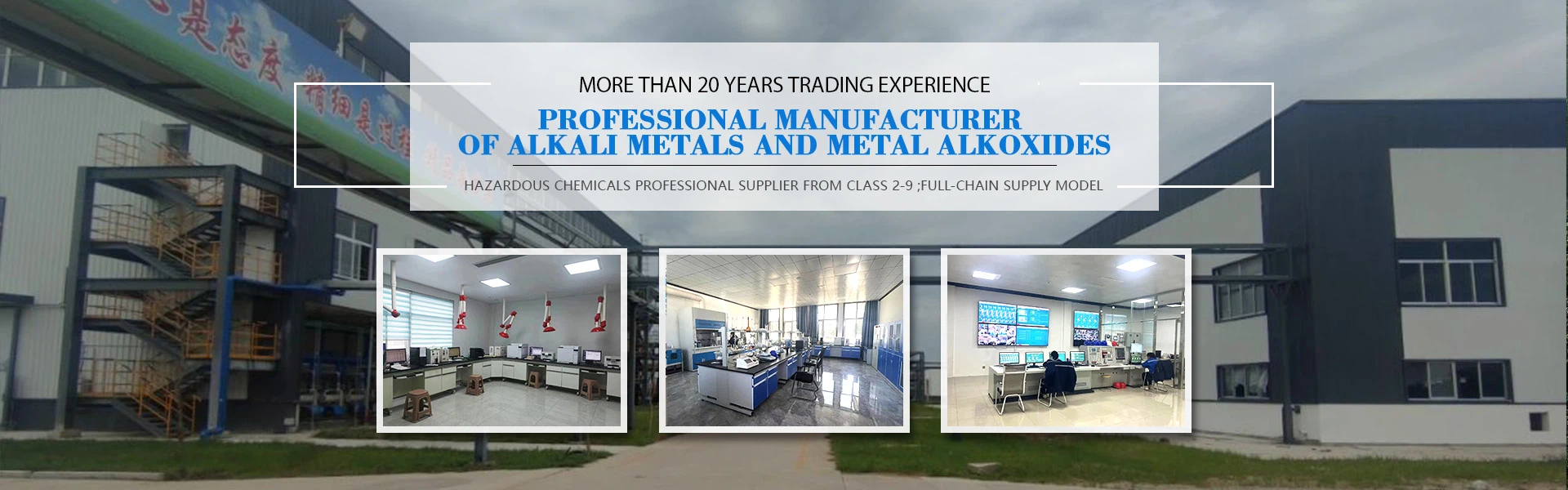
Our factory
Jinan Hong Sendi New Materials Co., Ltd. is located in Jinan. The company was founded in 2019 and is a modern chemical enterprise integrating research and development, production, and sales. The company's production bases are located in Jining and Weifang, Shandong Province.
Our product
The company specializes in customized production of pharmaceutical intermediates, pesticide intermediates, liquid crystal intermediates, and some raw materials. The alcohol sodium and alcohol potassium series are the company's main products, and they are the leading enterprises in the same industry in China. These products are widely used in the production of COVID-19 special drugs, vitamins, sulfonamides, antivirals, anticancer, and anti-AIDS drugs, as well as in the organic synthesis of low-toxic, long-lasting chemical herbicides, insecticides, fungicides, and growth regulators.
Research and development
The company's research and development center has strong research and innovation capabilities in process development and process optimization. There are three doctoral students and five master's students. The company also collaborates with more than ten universities and research institutes, such as Shandong University, Nankai University, and Moscow State University, and has embarked on a path of combined development of "production, study, and research," injecting vitality into the company's rapid development.
Our service
We provide quality and efficient services with a customer-centric business philosophy. The company has always been committed to providing strong and timely technical support, good and perfect services, and strives to win the best reputation in the customer and market.
Superoxides Could Help To Break Down Organic Matter in Water
In the aquatic environment, microbes, light and reduced compounds produce superoxide. Superoxide is a reactive oxygen species but relatively unreactive against organic compounds in water despite the prefix “super” in its name. Superoxide however can initiate a pathway of redox reactions. It can reduce ferric iron to ferrous one or be reduced itself to hydrogen peroxide. The Fenton reaction between ferrous iron and hydrogen peroxide produces hydroxyl radicals, very effective oxidants of organic matter. According the above mentioned reaction pathway, the production of one hydroxyl radical requires three superoxide ions. Superoxide is ubiquitously produced in lake water and thus a potential source of hydroxyl radicals. We tested the reactivity of superoxide with the ferric iron complexed with dissolved organic matter.
A recent study shows that the introduction of superoxide triggered the formation of hydroxyl radical in lake water. A big surprise was that the amount of hydroxyl radicals produced was 24-times larger than expected from the introduced amount of superoxide. The hydroxyl radicals reacted with dissolved organic matter and broke it down extensively. These reactions likely regenerated superoxide and were responsible for the autocatalytic production of hydroxyl radicals. Superoxide has a hidden superpower, as it can initiate autocatalytic production of hydroxyl radicals in lake water. Hydroxyl radicals are the nature’s own cleansing agent that can remove persistent natural and anthropogenic organic matter from the environment. Superoxide earns its prefix “super” when it produces hydroxyl radicals in an autocatalytic manner.
Recent studies have shown that nearly all microbes produce extracellular superoxide. Because microbes are ubiquitous so is superoxide too. In surface waters, iron is associated with dissolved organic matter and can catalyze production of hydroxyl radicals from superoxide. Superoxide-driven production of hydroxyl radicals is likely an important part of self-cleaning mechanisms that breaks down refractory organic matters in lakes. The extreme reactivity of hydroxyl radicals is beneficial in the advance oxidation techniques that aim for the breakdown of anthropogenic pollutants. In our study, the produced amount of hydroxyl radical was several times larger than the amount of superoxide introduced into the solution of iron associated with humic substances. This type of autocatalysis of hydroxyl radicals from superoxide is naturally a high desirable property in advance oxidation techniques and worth of further studies.
Biology of Superoxides
Superoxide is common in biology, reflecting the pervasiveness of O2 and its ease of reduction. Superoxide is implicated in a number of biological processes, some with negative connotations, and some with beneficial effects.
Like hydroperoxyl, superoxide is classified as reactive oxygen species. It is generated by the immune system to kill invading microorganisms. In phagocytes, superoxide is produced in large quantities by the enzyme NADPH oxidase for use in oxygen-dependent killing mechanisms of invading pathogens. Mutations in the gene coding for the NADPH oxidase cause an immunodeficiency syndrome called chronic granulomatous disease, characterized by extreme susceptibility to infection, especially catalase-positive organisms. In turn, micro-organisms genetically engineered to lack the superoxide-scavenging enzyme superoxide dismutase (SOD) lose virulence.
Superoxide is also deleterious when produced as a byproduct of mitochondrial respiration (most notably by Complex I and Complex III), as well as several other enzymes, for example xanthine oxidase, which can catalyze the transfer of electrons directly to molecular oxygen under strongly reducing conditions.Because superoxide is toxic at high concentrations, nearly all aerobic organisms express SOD. SOD efficiently catalyzes the disproportionation of superoxide: 2 HO2 → O2 + H2O2.
Other proteins that can be both oxidized and reduced by superoxide (such as hemoglobin) have weak SOD-like activity. Genetic inactivation ("knockout") of SOD produces deleterious phenotypes in organisms ranging from bacteria to mice and have provided important clues as to the mechanisms of toxicity of superoxide in vivo.
Yeast lacking both mitochondrial and cytosolic SOD grow very poorly in air, but quite well under anaerobic conditions. Absence of cytosolic SOD causes a dramatic increase in mutagenesis and genomic instability. Mice lacking mitochondrial SOD (MnSOD) die around 21 days after birth due to neurodegeneration, cardiomyopathy, and lactic acidosis. Mice lacking cytosolic SOD (CuZnSOD) are viable but suffer from multiple pathologies, including reduced lifespan, liver cancer, muscle atrophy, cataracts, thymic involution, haemolytic anemia, and a very rapid age-dependent decline in female fertility.
Superoxide may contribute to the pathogenesis of many diseases (the evidence is particularly strong for radiation poisoning and hyperoxic injury), and perhaps also to aging via the oxidative damage that it inflicts on cells. While the action of superoxide in the pathogenesis of some conditions is strong (for instance, mice and rats overexpressing CuZnSOD or MnSOD are more resistant to strokes and heart attacks), the role of superoxide in aging must be regarded as unproven, for now. In model organisms (yeast, the fruit fly Drosophila, and mice), genetically knocking out CuZnSOD shortens lifespan and accelerates certain features of aging: (cataracts, muscle atrophy, macular degeneration, and thymic involution). But the converse, increasing the levels of CuZnSOD, does not seem to consistently increase lifespan (except perhaps in Drosophila). The most widely accepted view is that oxidative damage (resulting from multiple causes, including superoxide) is but one of several factors limiting lifespan.The binding of O2 by reduced (Fe2+) heme proteins involves formation of Fe(III) superoxide complex.
Oxidative stress is a component of many diseases, including atherosclerosis, chronic obstructive pulmonary disease, Alzheimer’s disease and cancer, among others. Simultaneously, ROS are essential for a variety of biological functions, such as cell survival, growth, proliferation and differentiation, and immune response. However, one of the major obstacles to understanding the role of these species is the lack of adequate methods to detect ROS/RNS in vivo, mainly due to their very short lifetimes and the presence of several antioxidants in cells. In fact, radicals are continuously generated by most organisms as a result of the use of O2 as a terminal electron acceptor in the mitochondrial electron transport chains and in cytochrome P450 .
The term reactive species refers to two types of molecules: free radicals and non-radicals. This set of molecules is formed as a result of cellular metabolism and is represented in biological systems by reactive oxygen species ROS and reactive nitrogen species RNS, which arise in both normal physiological and pathological processes. Not excluding that, there are also reactive species from other elements, such as chlorine RClS and bromine RBrS, although ROS and RNS are the two major groups involved in redox biology.
The superoxide anion is a primary oxygen radical that is formed when an oxygen molecule acquires an electron. The initial formation of O2•− triggers a cascade of ROS, some of which, such as H2O2, behave as key molecules in cell signalling, and others, such as HO, are damaging. Ultimately, the biological impact of these molecules will be determined by the amount of ROS, cellular defences and the capacity for cellular adaptation .
O2•− is one of the most important reactive oxygen species ROS responsible for oxidative stress in bio-organisms and is generated as a by-product of the mitochondrial respiratory chain. Because of its charge, superoxide has a low membrane permeability, it passes through anion channels, but this is inefficient, and superoxide reacts to a large extent in the physiological compartment where it is generated.
Reactive oxygen species (ROS) are a group of highly reactive oxygen-containing chemicals produced exogenously or endogenously from the reduction of oxygen and include both radicals and non-radicals, one of which is superoxide. ROS present in the body are mostly of endogenous origin, although they can also be generated in response to external stimuli, such as ultraviolet light, ionising radiation, pollution, alcohol and tobacco consumption, drugs and toxic agents.
To control ROS, the body uses several antioxidant mechanisms, including enzymatic and non-enzymatic antioxidants. Non-enzymatic low-molecular-weight antioxidant compounds include cellular glutathione, vitamins C and E, β-carotene, polyphenols and uric acid.
Antioxidant enzymes include superoxide dismutase, catalase, glutathione reductase and glutathione peroxidase, among others. SOD catalyses the dismutation of superoxide to H2O2. Mammalian cells contain three forms of SOD: Mn-SOD, cytosolic Cu, Zn-SOD and extracellular Cu, Zn-SOD. MnSOD is most abundant in the mitochondria, whereas Cn, Zn-SOD predominates in the cytoplasm. Catalase is an important antioxidant enzyme that catalyses the reduction of H2O2 to H2O. Glutathione peroxidase is another important enzyme for the decomposition of H2O2. Polyphenols, ingested regularly through the fruit and vegetable diet, are a large family of natural organic compounds characterized by multiple hydroxyl phenolic units, with a polyphenolic structure, (several hydroxyl groups on aromatic rings), including four main classes: phenolic acids, flavonoids, stilbenes and lignans. Evidence and research to date supports the role of polyphenols in the prevention of cancer, cardiovascular and neurodegenerative diseases. A significant part of their beneficial effects are based on the modulation of cell signalling pathways.
What Is the Difference Between Peroxide and Superoxide?
Peroxides are composed of an oxygen-oxygen single bond. Where the O−O bond length is 1.490AThe electronic charge on peroxide is −2. Examples of peroxide compounds include Na2O2 , K2O2 and H2O2. Superoxides are compounds containing the anion O2−, The electronic charge is −1 , The O−O bond length in superoxide is 1.330A. Examples of superoxide compounds include NaO2, KO2 and RbO2.
The major difference between a peroxide and a superoxide is the oxidation state of oxygen. In superoxide, the oxidation state of oxygen is −0.5. While in case of peroxide, the oxidation state of oxygen is −1. Important point to keep in mind is that metals such as alkali, earth alkali and non-metals can form peroxide compounds. But only alkali metals can form superoxide compounds.
If superoxide is dissolved in water, it will rapidly undergo a disproportionation reaction forming O2 and OH−ions. Peroxides can be easily found in nature and in biological systems. Some plants use peroxide as a signalling chemical. Certain cells in our body use peroxides to catalyse the chemical reactions. Peroxide is also a very useful reagent in organic chemistry. Apart from oxidation state there are many other differences as well between these oxides. Hydrogen peroxide is the simplest peroxide. Also, superoxide is composed of highly reactive oxygen atoms.
Our factory
Jinan Hong Sendi New Materials Co., Ltd. is located in Jinan. The company was founded in 2019 and is a modern chemical enterprise integrating research and development, production, and sales. The company's production bases are located in Jining and Weifang, Shandong Province. The company specializes in customized production of pharmaceutical intermediates, pesticide intermediates, liquid crystal intermediates, and some raw materials. The alcohol sodium and alcohol potassium series are the company's main products, and they are the leading enterprises in the same industry in China. These products are widely used in the production of COVID-19 special drugs, vitamins, sulfonamides, antivirals, anticancer, and anti-AIDS drugs, as well as in the organic synthesis of low-toxic, long-lasting chemical herbicides, insecticides, fungicides, and growth regulators. The metal alcohol salt products are also widely used in the synthesis of biodiesel, flavor and fragrance, liquid crystal materials, and high-end pigments. The company's research and development center has strong research and innovation capabilities in process development and process optimization.

FAQ
We're professional superoxides manufacturers and suppliers in China, specialized in providing high quality chemicals made in China. We warmly welcome you to buy superoxides at competitive price from our factory. Contact us for pricelist and free sample.
SODIUM PEROXIDE, SODIUM SUPEROXIDE, Superoxides