


Hydroxide
Hydroxide is a diatomic anion with chemical formula OH−. It consists of an oxygen and hydrogen atom held together by a single covalent bond, and carries a negative electric charge. It is an important but usually minor constituent of water. It functions as a base, a ligand, a nucleophile, and a catalyst. The hydroxide ion forms salts, some of which dissociate in aqueous solution, liberating solvated hydroxide ions. Sodium hydroxide is a multi-million-ton per annum commodity chemical. The corresponding electrically neutral compound HO• is the hydroxyl radical. The corresponding covalently bound group –OH of atoms is the hydroxy group. Both the hydroxide ion and hydroxy group are nucleophiles and can act as catalysts in organic chemistry. Many inorganic substances which bear the word hydroxide in their names are not ionic compounds of the hydroxide ion, but covalent compounds which contain hydroxy groups.


Product Categories


Advantages of Hydroxide
Acid-base reactions
Hydroxides take part in acid-base reactions because of their basic character. They easily combine with acids to create salt and water.
Ionization
Hydroxides in aqueous solutions ionize to form hydroxide ions (oh–), which add to the solution’s alkaline character.
Redox reactions
Redox reactions, particularly those involving transition metals, can occur in some metal hydroxides. They could take part in oxidation-reduction processes.
Dehydration
When exposed to heat, some hydroxides can go through dehydration processes in which they lose water molecules and become oxides.
Our factory
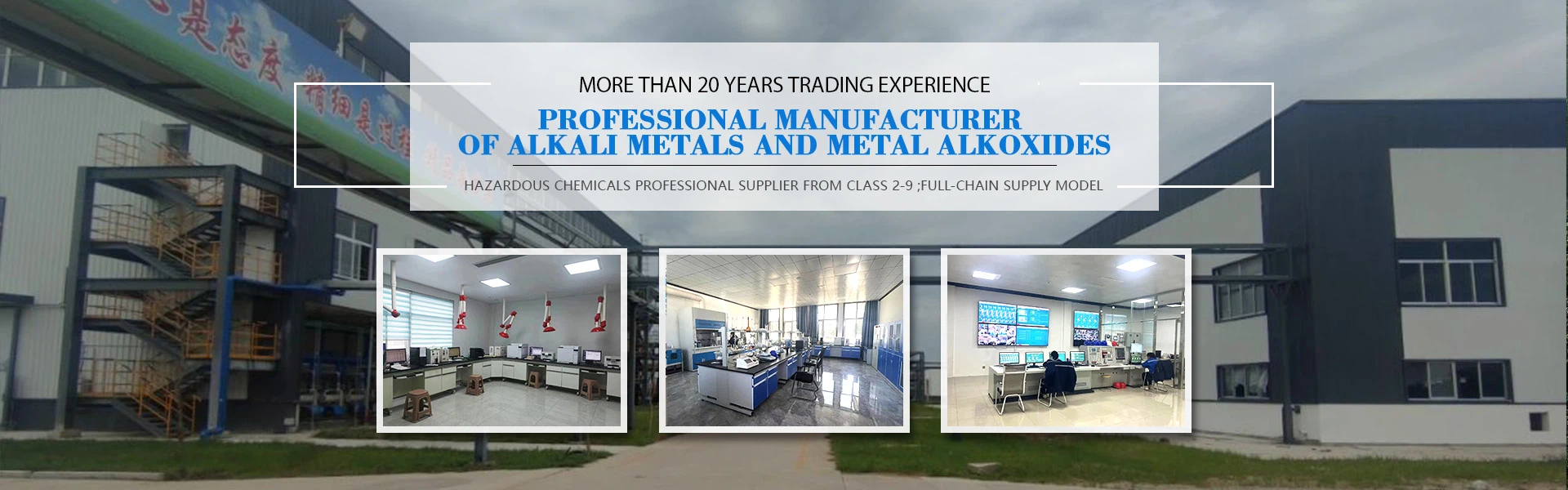
Jinan Hong Sendi New Materials Co., Ltd. is located in Jinan. The company was founded in 2019 and is a modern chemical enterprise integrating research and development, production, and sales. The company's production bases are located in Jining and Weifang, Shandong Province.
Our product
The company specializes in customized production of pharmaceutical intermediates, pesticide intermediates, liquid crystal intermediates, and some raw materials. The alcohol sodium and alcohol potassium series are the company's main products, and they are the leading enterprises in the same industry in China. These products are widely used in the production of COVID-19 special drugs, vitamins, sulfonamides, antivirals, anticancer, and anti-AIDS drugs, as well as in the organic synthesis of low-toxic, long-lasting chemical herbicides, insecticides, fungicides, and growth regulators.
Research and development
The company's research and development center has strong research and innovation capabilities in process development and process optimization. There are three doctoral students and five master's students. The company also collaborates with more than ten universities and research institutes, such as Shandong University, Nankai University, and Moscow State University, and has embarked on a path of combined development of "production, study, and research," injecting vitality into the company's rapid development.
Our service
We provide quality and efficient services with a customer-centric business philosophy. The company has always been committed to providing strong and timely technical support, good and perfect services, and strives to win the best reputation in the customer and market.
Types of Hydroxide
Organic hydroxide
Compounds containing the hydroxyl group (-OH) joined to a carbon atom in an organic molecule are known as organic hydroxides. Organic hydroxides, which have a hydroxyl group covalently bound to a carbon atom, are frequently found in organic molecules such as carboxylic acids, phenols, and alcohols. Methanol (CH3OH), Phenol (C6H5OH) are few examples of organic hydroxide.
Inorganic hydroxide
Compounds that do not belong to an organic molecule but yet include the hydroxide ion (OH⁻) are known as inorganic hydroxides. When a metal combines with water or an acid, it usually forms metal hydroxides. Because they are bases, inorganic hydroxides frequently dissociate in water to produce hydroxide ions. Inorganic hydroxides include, sodium hydroxide (NaOH), Calcium Hydroxide (Ca(OH)2), etc.

This is the basic structure of hydroxide ions. There is a formation of a covalent bond between hydrogen ion and oxygen ion and combinely, they formed a hydroxide ion in a chemical equation. Hydrogen is having a valency of one while oxygen is having a valency of two. So one electron from hydrogen and one electron from oxygen will form a covalent bond.
When combined with various divalent metals, it displays a cylindrical symmetry shape.
When we add sodium metal to water the formation of sodium hydroxide takes place. Let us understand by the reaction:- 2Na+2H2O→2NaOH+H2. Not only this but the formation of calcium hydroxide also take place with the exchange reaction. When we react copper sulphate with sodium hydroxide then through an exchange reaction formation of calcium hydroxide takes place. Let us understand the reaction:-CuSO4+2NaOH→Cu(OH)2+Na2SO4.
What Is the Difference Between Hydroxides and Bases?
In chemistry, bases are all hydroxides that are soluble in water. However, not all of these compounds are prone to reaction with water molecules. The sodium or potassium hydroxides are freely soluble, so we can call them bases: a sodium base and a potassium base, respectively. It is quite different with the iron(III) hydroxide (Fe2(OH)3), which is slightly soluble in water and so cannot be called a base. It is similar in the case of copper(III) or silver hydroxides, as they precipitate from aqueous solutions in the form of deposits. The solubility of particular hydroxides can be checked in the salt and hydroxide solubility table. We should note that not every hydroxide is a base, but every base is a hydroxide.
Bases are all hydroxides of the metals from the first group in the periodic table (the so-called lithium group) as well as a few metals from the second group (calcium, strontium, barium). An exception is the ammonium base, which is the only base whose molecules do not contain a metal atom. Bases, as chemical compounds, are freely soluble in water, and in aqueous solutions they undergo electrolytic dissociation, decomposing into cations and anions. The produced ions are capable of conducting electric current. Therefore, bases are also electrolytes.
The decomposition of hydroxides into ions also affects their ‘basic character’. The presence of a base in an aqueous solution increases its pH level, so the concentration of hydroxide ions OH– decreases. The amount of these anions can be determined by measuring the pH of the tested solution with an appropriate ion-selective electrode. We can also assess the pH visually by adding a proper indicator to the solution or immersing an indication paper, which will turn green or dark blue in the presence of bases. The most popular indicator used to detect bases is phenolphthalein – in the aqueous solutions of hydroxides, it turns a characteristic raspberry colour.
Sodium hydroxide solutions, which are also known as lye and caustic soda, can be used in the manufacturing of pulp and paper, textiles, drinking water, soaps and detergents, and also as a drain cleaner. The worldwide production, according to 2004 was approximately 60 million tonnes. The principal method of manufacture is given as the chloralkali process. Solutions that contain the hydroxide ion are produced when a salt of a weak acid is dissolved in water. Sodium carbonate can be used as an alkali, for example, by the hydrolysis virtue reaction.
Although the sodium carbonate solution's base strength is lower compared to the concentrated sodium hydroxide solution, it has the advantage of being solid. It can also be manufactured on a vast scale (in 2005 - 42 million tonnes) by Solvay's process. An example of sodium carbonate used as an alkali is washing a soda (alternate name for sodium carbonate), which acts on the insoluble esters, like triglycerides, commonly known as fats hydrolyze and make them soluble. Bauxite, which is basic aluminium hydroxide, is the principal ore from which the metal is manufactured. In the same way, lepidocrocite (γ-FeO(OH)) and goethite (α-FeO(OH)), basic hydroxides of iron, which are among the principal ores, that can be used for the manufacture of metallic iron. Other numerous uses can be found in many individual hydroxides.
Hydroxides are proton acceptors in bases: They receive protons or hydrogen ions from acids for the formation of water. The equation for this is the easiest way to represent a neutralization reaction, which can be given as, H+ + OH- → H2O. The hydroxide radicals can also be found in other organic compounds such as sugars (fructose, glucose, starch, and more), Soap, and Lipids(Fats). Furthermore, we all know their differential protective and useful purposes. A few hydroxides like Slaked lime Ca(OH)2 can be used to prepare Calcium carbonate (CaCO3) and ammonia. The other basic solutions absorb acidic gases like carbon dioxide and sulfur dioxide, thereby cleaning the air in its vicinity.
Inorganic Hydroxides
Alkali metals
Aside from NaOH and KOH, which enjoy very large scale applications, the hydroxides of the other alkali metals also are useful. Lithium hydroxide is a strong base, with a pKb of −0.36.[13] Lithium hydroxide is used in breathing gas purification systems for spacecraft, submarines, and rebreathers to remove carbon dioxide from exhaled gas. The hydroxide of lithium is preferred to that of sodium because of its lower mass. Sodium hydroxide, potassium hydroxide, and the hydroxides of the other alkali metals are also strong bases.
Alkaline earth metals
Beryllium hydroxide Be(OH)2 is amphoteric. The hydroxide itself is insoluble in water, with a solubility product log K*sp of −11.7. Addition of acid gives soluble hydrolysis products, including the trimeric ion [Be3(OH)3(H2O)6]3+, which has OH groups bridging between pairs of beryllium ions making a 6-membered ring. At very low pH the aqua ion [Be(H2O)4]2+ is formed. Addition of hydroxide to Be(OH)2 gives the soluble tetrahydroxoberyllate or tetrahydroxidoberyllate anion, [Be(OH)4]2−. The solubility in water of the other hydroxides in this group increases with increasing atomic number.Magnesium hydroxide Mg(OH)2 is a strong base (up to the limit of its solubility, which is very low in pure water), as are the hydroxides of the heavier alkaline earths: calcium hydroxide, strontium hydroxide, and barium hydroxide. A solution or suspension of calcium hydroxide is known as limewater and can be used to test for the weak acid carbon dioxide. The reaction Ca(OH)2 + CO2 ⇌ Ca2+ + HCO−3 + OH− illustrates the basicity of calcium hydroxide. Soda lime, which is a mixture of the strong bases NaOH and KOH with Ca(OH)2, is used as a CO2 absorbent.
Boron group elements
Aluminium hydrolysis as a function of pH. Water molecules attached to Al are omitted. The simplest hydroxide of boron B(OH)3, known as boric acid, is an acid. Unlike the hydroxides of the alkali and alkaline earth hydroxides, it does not dissociate in aqueous solution. Instead, it reacts with water molecules acting as a Lewis acid, releasing protons. B(OH)3 + H2O ⇌ B(OH)−4 + H+. A variety of oxyanions of boron are known, which, in the protonated form, contain hydroxide groups. In the Bayer process for the production of pure aluminium oxide from bauxite minerals this equilibrium is manipulated by careful control of temperature and alkali concentration. After removal of the insolubles, the so-called red mud, pure aluminium hydroxide is made to precipitate by reducing the temperature and adding water to the extract, which, by diluting the alkali, lowers the pH of the solution. Basic aluminium hydroxide AlO(OH), which may be present in bauxite, is also amphoteric. In mildly acidic solutions, the hydroxo/hydroxido complexes formed by aluminium are somewhat different from those of boron, reflecting the greater size of Al(III) vs. B(III). The concentration of the species [Al13(OH)32]7+ is very dependent on the total aluminium concentration. Various other hydroxo complexes are found in crystalline compounds. Perhaps the most important is the basic hydroxide AlO(OH), a polymeric material known by the names of the mineral forms boehmite or diaspore, depending on crystal structure. Gallium hydroxide, indium hydroxide, and thallium(III) hydroxide are also amphoteric. Thallium(I) hydroxide is a strong base.
Carbon group elements
Carbon forms no simple hydroxides. Carbon dioxide is also known as carbonic anhydride, meaning that it forms by dehydration of carbonic acid H2CO3 (OC(OH)2). Silicic acid is the name given to a variety of compounds with a generic formula [SiOx(OH)4−2x]n. Orthosilicic acid has been identified in very dilute aqueous solution. It is a weak acid with pKa1 = 9.84, pKa2 = 13.2 at 25 °C. It is usually written as H4SiO4, but the formula Si(OH)4 is generally accepted. Other silicic acids such as metasilicic acid (H2SiO3), disilicic acid (H2Si2O5), and pyrosilicic acid (H6Si2O7) have been characterized. These acids also have hydroxide groups attached to the silicon; the formulas suggest that these acids are protonated forms of polyoxyanions.
Most compounds containing the hydroxide ion are chemical bases. Thus, hydroxide ions are involved in numerous acid-base reactions, including the reaction known as neutralization. A substance that produces hydroxide ions when dissolved in aqueous solution is called an Arrhenius base. One example is ammonia (NH3): NH3(g) + H2O(l) ⇌ NH4+(aq) + OH−(aq).
Salts containing hydroxide are called base salts. Base salts will dissociate into a cation and one or more hydroxide ions in water, making the solution basic. Base salts will undergo neutralization reactions with acids. In general, an acid-alkali reactions can be simplified to OH−(aq) + H+(aq) → H2O(l). Ions that do not participate in this reaction are called spectator ions and are not shown here.
Most inorganic hydroxide salts are insoluble in water. Important exceptions are salts in which the cations are alkali metal ions and or NH4+, Ba2+, Sr2+, Ca2+, or Tl+ ions.

Our factory
Jinan Hong Sendi New Materials Co., Ltd. is located in Jinan. The company was founded in 2019 and is a modern chemical enterprise integrating research and development, production, and sales. The company's production bases are located in Jining and Weifang, Shandong Province. The company specializes in customized production of pharmaceutical intermediates, pesticide intermediates, liquid crystal intermediates, and some raw materials. The alcohol sodium and alcohol potassium series are the company's main products, and they are the leading enterprises in the same industry in China. These products are widely used in the production of COVID-19 special drugs, vitamins, sulfonamides, antivirals, anticancer, and anti-AIDS drugs, as well as in the organic synthesis of low-toxic, long-lasting chemical herbicides, insecticides, fungicides, and growth regulators. The metal alcohol salt products are also widely used in the synthesis of biodiesel, flavor and fragrance, liquid crystal materials, and high-end pigments. The company's research and development center has strong research and innovation capabilities in process development and process optimization.

FAQ
We're professional hydroxide manufacturers and suppliers in China, specialized in providing high quality chemicals made in China. We warmly welcome you to buy hydroxide at competitive price from our factory. Contact us for pricelist and free sample.
Hydroxide, Lithium Hydroxide, Sodium Hydroxide