


Metal Alloy
In the world of metalwork, alloys are an essential part of making sure that things go according to plan and that the metal is as strong and sturdy as it can be. An alloy is created by mixing metal with another component, either another metal or a nonmetal substance. Metal alloys are generally made by melting the substances, mixing them together, and then letting them cool to room temperature, resulting in a solid material. Many pure metals, like gold, are notably soft, making them less than ideal for certain uses. Making them into an alloy can add strength to the metal, along with other enhanced chemical properties. Hardness, machinability, and corrosion resistance are other properties that can be added or enhanced by creating an alloy.


Product Categories


Advantages of Metal Alloy
Strong mixtures of positive qualities
Metal alloys are mixtures of various metals that retain the good qualities while excluding the undesirable ones. As a result, the compound is more durable than its pure metal parent. Since pure metals are frequently brittle, they are combined to form alloys which produce materials that are stronger yet more workable. In contrast to pure metal, where all of the atoms are the same, metal alloys have a variety of atoms. As a result, the atoms in metal alloys have a harder time moving around, making them typically much stronger and harder than pure metals. By employing alloys, one can construct stronger buildings or create stronger products. Stainless steel is an incredibly strong alloy.
Built to withstand corrosion
Metal alloys are combinations and compounds of several metals and non-metals. While pure metals are chemically reactive and easily corroded, alloys can be created to withstand corrosion. Metals can be quickly eaten away by corrosion, which makes repairs expensive. Since the corrosion resistance of metal alloys is often substantially higher than that of pure metals, metal alloys aid in delaying and preventing this ongoing corrosion issue.
Workable and easily adaptable
Compared to pure metals, metal alloys are also more adaptable. Metal alloys allow for further modifications and the enhancement of specific qualities that are more preferred in various applications of a workable material. Metal alloys combine the best characteristics of multiple materials while pure metals only contain their inherent traits, whether good or bad. In comparison to pure metals, metal alloys provide more possibilities for various projects.
Our factory
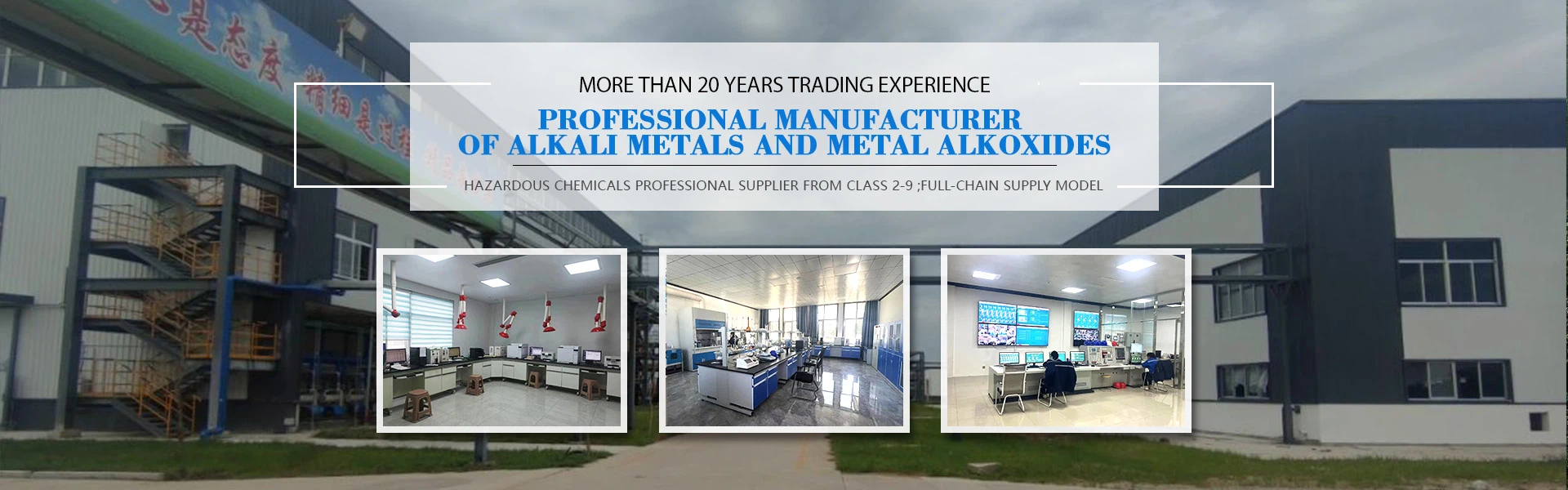
Jinan Hong Sendi New Materials Co., Ltd. is located in Jinan. The company was founded in 2019 and is a modern chemical enterprise integrating research and development, production, and sales. The company's production bases are located in Jining and Weifang, Shandong Province.
Our product
The company specializes in customized production of pharmaceutical intermediates, pesticide intermediates, liquid crystal intermediates, and some raw materials. The alcohol sodium and alcohol potassium series are the company's main products, and they are the leading enterprises in the same industry in China. These products are widely used in the production of COVID-19 special drugs, vitamins, sulfonamides, antivirals, anticancer, and anti-AIDS drugs, as well as in the organic synthesis of low-toxic, long-lasting chemical herbicides, insecticides, fungicides, and growth regulators.
Research and development
The company's research and development center has strong research and innovation capabilities in process development and process optimization. There are three doctoral students and five master's students. The company also collaborates with more than ten universities and research institutes, such as Shandong University, Nankai University, and Moscow State University, and has embarked on a path of combined development of "production, study, and research," injecting vitality into the company's rapid development.
Our service
We provide quality and efficient services with a customer-centric business philosophy. The company has always been committed to providing strong and timely technical support, good and perfect services, and strives to win the best reputation in the customer and market.
What Are the Most Common Metal Alloy
Mild steel
Because the metalworking industry rarely uses pure metals, there is a myriad of alloys that are commonly used. Indeed, working with alloys is the preferred method for most metalworkers because they are so versatile and offer a longer lifespan than pure metals. This alloy is also known as “low carbon steel” and consists of around .05% to .25% carbon added to pure iron. This is the lowest amount of carbon that can be added to iron to produce steel. It is often used in signage, furniture, decorations, fencing, and nails, among other applications.
Cast Iron
Like mild steel, cast iron is a metal alloy of carbon and iron. The carbon content is generally upwards of 2%.
Stainless steel
One of the most common alloys, stainless steel is an alloy made mostly from iron, mixed with chromium, nickel, or molybdenum. The content of the added metal is usually around 15-30%. Stainless steel alloy is often used in kitchen appliances, medical instruments, hardware, and machinery.
Aluminum alloy
As a softer metal, aluminum is usually alloyed with other metals to give it more strength and hardness. Manganese or copper are often used as the alloy material to create these desirable properties.

What Are the Applications of Metal Alloy
Construction
We see steel and aluminum alloys used often in construction, exploiting their elevated strength and durability. The range of construction applications is extensive, from rebar (mild steel) to faucets (brass), from sidings (aluminum) to beams (hot or cold rolled steel), from window frames (aluminum) to handrails (stainless steel).
Transportation
We also see aluminum alloys being heavily utilized in the entire transport sector. Airframes and skins/control surfaces (aluminum), truck chassis (steel and aluminum), monocoque car bodies (steel), fuel tanks (aluminum or steel), engines (cast iron, aluminum). They are typically high strength-to-weight ratio, are corrosion-resistant, and recyclable. Aluminums weight influences fuel efficiency by reducing overall vehicle weight while still fulfilling strength requirements, while steel is heavier but more fatigue-resistant.
Electronics
Alloys play a wide range of key roles in electrical components, offering tunable beneficial properties like high conductivity, high resistance, strength, and corrosion/electrochemical resistance. Cupro-nickel and brass alloys are used in electrical wiring, switchgear, and connectors because of their superior electrical conductivity combined with mechanical durability. Nickel-chromium and manganese alloys are used in resistors and heating elements, where precise electrical resistance and heat tolerance are required. The choice of alloys for electrical/electronic applications seeks performance, longevity, and operational efficiency. By tailoring the composition of these alloys, the desired balance of electrical and physical properties can be tuned, making various alloys key to modern electrical and electronic devices.
Medical devices
Alloys are vital in medical devices, a major industry that services, delivering the required biocompatibility, strength, and corrosion resistance for implants, joint replacements, and stents, which must integrate well with and be tolerated by body tissues and fluids. Surgical instruments and dental devices are from various alloys, ensuring durability and precision. Typical metals/alloys tolerance of sterilization methods without degrading is central to their suitability for medical applications, for patient safety, and device longevity.
Jewelry
Gold, silver, platinum, and other precious metals are used in jewelry. Despite their attractive properties, they are rarely used in pure form, as they are typically too soft to serve durably. Bronze, cupro-nickel, nickel-silver, and many more alloys are used to create lower cost jewelry. Alloying allows selection/control of the colors that can be obtained, which are not possible with pure metals.
Manufacturing
Alloys serve in all aspects of manufacturing, making both the machines/tools that perform the tasks, the buildings that house the machines, and the products that the machines make. Few areas of manufacture use pure metals - examples being chemical/catalytic processes and electrical conductors (typically high purity copper or aluminum).
Resistance to heat and corrosion
Is your material going to be outside in the elements on a regular basis? If so, you’ll want to pay special attention to rust and whether the metals you mix can withstand consistent exposure to water. Extreme heat and cold can damage certain alloys as well, so thinking about the extremes will help you make a final decision.
Strength
Steel, aluminum and magnesium and many other alloys are much stronger than their pure metal counterparts.
Plasticity
You might need your metal to be hammered into a sheet, which would require high malleability. Maybe, instead, you need a fabricator to stretch your alloy into wires, which means you’re looking for high ductility. Think about your final product before deciding, because every alloy has a different plasticity value.
Conductivity
Copper alloys are just one mixture that safely and efficiently conduct thermal heat and electricity, which makes them essential for electrical components in appliances like heaters. Does your alloy need to be conductive or do you specifically need to avoid that feature?
Weight
Is mass a factor for your final project? If so, you might want to choose titanium, aluminum or magnesium alloys. They’re extremely lightweight without sacrificing strength, so you can cut down on the bulk of your build without choosing a weak metal.
Fabrication and form requirements
The alloy you choose will affect the time it takes for fabrication. Welding, machining and other processes take more time with certain mixtures. Each alloy has a different form and dimension capacity, as well. You’ll need to select the right alloy as well as a good custom metal fabricator to get what you need.
Suitability for welding
Some alloys do not successfully undergo welding, which means you won’ t be able to create large homogenous sheets from smaller pieces unless you choose accordingly.
Cost
You’ ll want an alloy that fits in your budget, but don’ t automatically go for the cheapest. Selecting quality materials from experienced fabricators will reduce environmental damage, repair requirements and maintenance costs over the long run.
How Are Metal Alloy Made?
Melting and mixing compounds
Melting and mixing compounds is the most traditional method to craft alloys. Manufacturers heat metals until they reach their melting point and mix them in predetermined proportions. Once thoroughly combined, the mixture is cooled down to form a solid alloy. Think of it as making a soup, in with manufacturers combining different ingredients to make a delicious concoction!
Powder metallurgy
This technique skips the melting process altogether. Manufacturers grind metals into powders, mix them in the desired proportions, and compress them under high pressure. The resulting compact is then heated in a controlled environment, allowing the metals to bond. Manufacturers typically use this method when metals have vastly different melting points.
Ion implantation
Ion implantation is an advanced method that involves firing ions (charged atoms) of one metal into the surface of another at high velocities. This process changes the structure of the surface, creating a thin layer of alloy. It is like giving the metal a facelift, enhancing its surface properties without affecting its core. Alloys are complex constructions that have helped build our modern world. Next time you come across a metal object, be it a jewelry piece or a product from your trusted sheet metal supplier, take a moment to appreciate the science and artistry that went into creating it.
Types of Common Metal Alloy Heat Treatment
Annealing
Iit is a method where a metal is heated beyond the upper critical temperature and then cooled at a slow rate by air, not by liquid or oil. The purpose of the annealing method is to soften the metal (by decreasing its hardness) and render the metal more suitable for cold working and forming. It also relieves stresses the metal may have due to prior cold working processes. Annealing also enhances the metal’s machinability, ductility and toughness. There are several annealing techniques such as re-crystallisation annealing, full annealing, partial annealing and final annealing. For further information on annealing, see our article:Annealing: What is it and how it works.
Normalising
It is a heat treatment process used for relieving internal stresses caused by processes such as welding, casting, or quenching. The metal is heated to a temperature that is 30-50° c above its upper critical temperature and is higher than the one used for hardening or annealing. After holding at this temperature for a designated time, it is cooled in air. Normalising creates a uniform grain size and composition throughout the material. Steels in a normalised form are harder and stronger than in any other condition, making them suitable for handling massive external loads or impact strength.
Hardening
It is used to increase the hardness of a metal. In some cases, only the outer surface may be hardened (case hardening). The metal is hardened by heating it to the specified temperature, then cooled rapidly, aka quenched, by submerging it into a cooling medium, which can be oil, brine, polymers or most commonly water. The resulting material will have increased hardness and strength, but simultaneously the brittleness increases too. Case hardening uses the same method but only a thin outer layer is transformed resulting in a hard outer layer with a softer core.
Ageing
Ageing or precipitation hardening is a method mostly used to increase the yield strength of malleable metals. The process produces uniformly dispersed particles within a metal’s grain structure which subsequently changes the materials’ properties. Precipitation hardening usually follows another heat treatment process that reaches higher temperatures. Ageing, however, only elevates the temperature to medium levels and brings it down quickly again. Some metals can age naturally at room temperature while others will only age artificially at elevated temperatures.
Stress relieving
This method is common for boiler parts, air bottles, accumulators, etc. This method takes the metal to a temperature just below its lower critical border. The cooling process is slow and uniform. This is done to relieve stresses that have built up in the parts due to earlier processes such as forming, machining, rolling or straightening. Tempering tempering is a method used to reduce brittleness and increase the strength of the metal. Most iron-based alloys are very hard and therefore very brittle. When tempered, these metals are heated to a temperature lower than the critical point. This reduces brittleness and maintains hardness.
Carburisation
In this heat treatment process, the metal is heated in the presence of another material that releases carbon on decomposition. The released carbon is absorbed into the surface of the metal. The carbon content of the surface increases, making it harder than the inner core. Decarburization involves the removal of carbon from the surface of steel, either by applying heat or through the normal ageing process of oxidation.
Nitriding
Involves heating the steel in the presence of ammonia or other nitrogenous material, which adds nitrogen to the metal surface and produces case hardening without requiring any quenching. Nitriding also achieves a higher hardness on the surface than the carburizing method, which increases resistance to wear and tear and improves the fatigue life of the metal.
Our factory
Jinan Hong Sendi New Materials Co., Ltd. is located in Jinan. The company was founded in 2019 and is a modern chemical enterprise integrating research and development, production, and sales. The company's production bases are located in Jining and Weifang, Shandong Province. The company specializes in customized production of pharmaceutical intermediates, pesticide intermediates, liquid crystal intermediates, and some raw materials. The alcohol sodium and alcohol potassium series are the company's main products, and they are the leading enterprises in the same industry in China. These products are widely used in the production of COVID-19 special drugs, vitamins, sulfonamides, antivirals, anticancer, and anti-AIDS drugs, as well as in the organic synthesis of low-toxic, long-lasting chemical herbicides, insecticides, fungicides, and growth regulators. The metal alcohol salt products are also widely used in the synthesis of biodiesel, flavor and fragrance, liquid crystal materials, and high-end pigments. The company's research and development center has strong research and innovation capabilities in process development and process optimization.

FAQ
We're professional metal alloy manufacturers and suppliers in China, specialized in providing high quality chemicals made in China. We warmly welcome you to buy metal alloy at competitive price from our factory. Contact us for pricelist and free sample.
Sodium potassium Alloy, Metal Alloy, Aluminum Based Alloys