


Resin
In polymer chemistry and materials science, a resin is a solid or highly viscous substance of plant or synthetic origin that is typically convertible into polymers. Resins are usually mixtures of organic compounds. This article focuses mainly on naturally occurring resins. Plants secrete resins for their protective benefits in response to injury. Resins protect plants from insects and pathogens. Resins confound a wide range of herbivores, insects, and pathogens, while the volatile phenolic compounds may attract benefactors such as parasitoids or predators of the herbivores that attack the plant.


Product Categories


Advantages of Resin
Durability
Resin is known for its strength, durability, and resilience, making it suitable for crafting long-lasting projects. Once properly cured, resin is resistant to chemicals, water, and various weather conditions.
Weather resistance
Resin compounds are capable of withstanding exposure to rain, snow, and other environmental elements. They can also endure significant temperature changes without losing their shape or strength. ArtResin also contains UV light stabilizers to help delay the damaging effects of the sun. Of course, it makes sense to avoid placing cured resin in direct sunlight to prevent premature yellowing.
Heat resistance
Resins possess excellent heat resistance properties, although the exact degree depends on the resin type and its formula. For example, ArtResin, formulated for artwork coatings, can withstand temperatures up to approximately 50°C/120°F. On the other hand, Industrial Clear epoxy resin, intended for furniture, woodworking projects, and other industrial applications offers a higher heat resistance of up to 176°C/350°F.
Ease of use
Resin is quite an easy material to work with, especially when compared to wood or metal. It easily takes many different forms and can be used to produce a wide variety of objects. It allows for techniques such as pouring, casting, and brushing-on, that can simplify the application process. However, always follow manufacturer guidelines and safety precautions when working with resin.
Relatively low cost
In many cases, resin is more cost-effective than alternative materials. Of course, you get what you pay for, so the costs depend on factors such as quality, resin type, the intended use, and safety aspects.
Safety
It's important to prioritize safety when working with resin, as not all resins are created equally. For projects in home or studio settings, such as resin art or DIY crafts, choose a high quality resin deemed safe for these environments. Consult the Safety Data Sheet (SDS) for required personal protective equipment and the Technical Data Sheet for details on clarity, viscosity, cure time, UV resistance, and odor.
Our factory
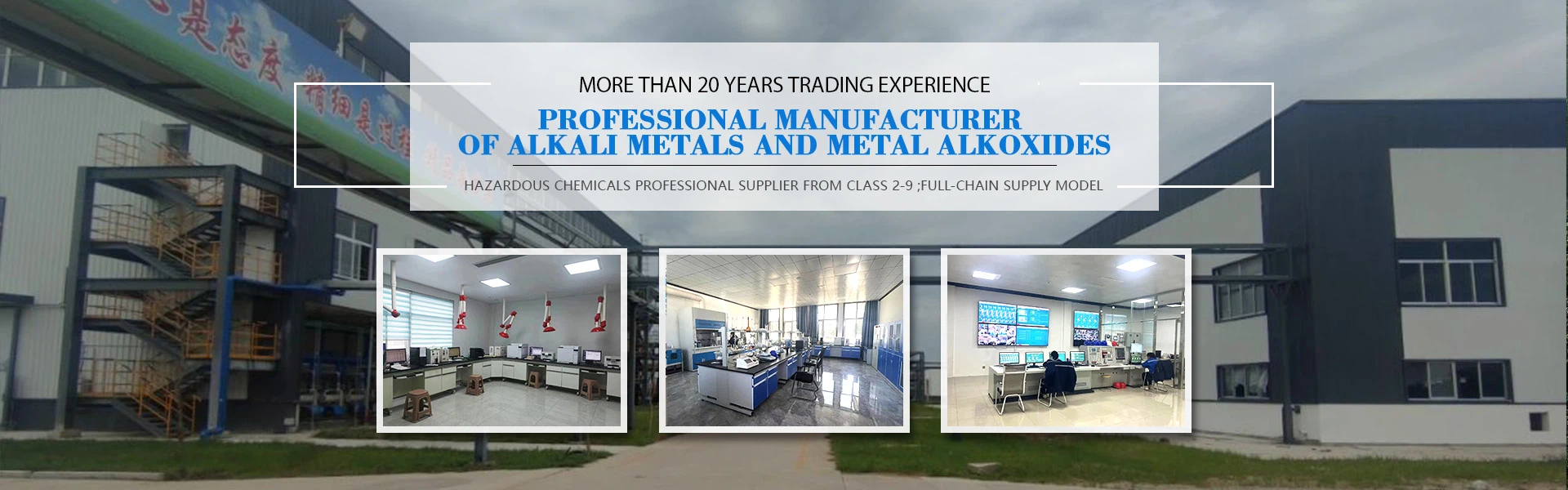
Jinan Hong Sendi New Materials Co., Ltd. is located in Jinan. The company was founded in 2019 and is a modern chemical enterprise integrating research and development, production, and sales. The company's production bases are located in Jining and Weifang, Shandong Province.
Our product
The company specializes in customized production of pharmaceutical intermediates, pesticide intermediates, liquid crystal intermediates, and some raw materials. The alcohol sodium and alcohol potassium series are the company's main products, and they are the leading enterprises in the same industry in China. These products are widely used in the production of COVID-19 special drugs, vitamins, sulfonamides, antivirals, anticancer, and anti-AIDS drugs, as well as in the organic synthesis of low-toxic, long-lasting chemical herbicides, insecticides, fungicides, and growth regulators.
Research and development
The company's research and development center has strong research and innovation capabilities in process development and process optimization. There are three doctoral students and five master's students. The company also collaborates with more than ten universities and research institutes, such as Shandong University, Nankai University, and Moscow State University, and has embarked on a path of combined development of "production, study, and research," injecting vitality into the company's rapid development.
Our service
We provide quality and efficient services with a customer-centric business philosophy. The company has always been committed to providing strong and timely technical support, good and perfect services, and strives to win the best reputation in the customer and market.
Classification of Resin
Oleoresin
These are naturally occurring resin, which is a mixture of resin and volatile oil. Examples of such types of resins are capsicum, ginger, and copaiba.
Gum resin
These types of resins are associated with the gum. Examples of such types of resins are colophony and cannabis.
Oleo gum resins
These types of resins are a mixture of volatile oil, gum, and resin. Examples of such types of resins are guggul, asafoetida, and myrrh.
Balsams resin
These types of resin are a mixture of benzoic acid and cinnamic acid or esters of these acids. It can occur in free or combined form. Examples of such types of resins are benzoin, tolu balsam, peru balsam.
Glyco resin
This type of resin occurs in combination with sugar. These resins are linked with the sugar molecule by the glycosidic linkage. Examples of such types of resins are jalap and podophyllum.

How Does Resin Work?
The answer lies in its chemical composition. Resin is a polymer, which means it is made up of long chains of molecules that are bonded together. These molecules are called monomers, and they can be derived from various sources, such as plants, animals, or synthetic materials. When the resin is mixed with a hardener, a chemical reaction occurs that causes the monomers to link together and form a solid. The hardener acts as a catalyst, speeding up the chemical reaction and ensuring that the resin cures properly. The exact curing time and temperature depend on the type of resin and hardener used.
Resin is often used in applications where strength and durability are important, such as in construction and industrial manufacturing.
Some types of resin, such as epoxy resin, have high tensile strength and can withstand extreme temperatures and pressure. Other types of resin, such as polyester resin, are more flexible and are often used in applications such as boat building or automotive repair. If you would like to try out the joy of resin for an art project, mouldd resin is a versatile resin perfect for beginners and artists alike!
Creative Applications of Resin
Resin art
Artists use resin to create stunning, vibrant artworks by layering pigments and other materials within the resin layers. The glossy finish adds depth and intrigue to the pieces.
Jewelry making
Resin allows jewelry makers to encapsulate flowers, beads, and other small objects, creating unique and personalized accessories.
Woodworking
Resin is often combined with wood to create captivating furniture, countertops, and decorative items. The combination of natural wood and colorful resin accents adds a modern touch to traditional woodworking.
Home decor
Decorative items such as coasters, trays, and plant holders can be crafted using resin. Its transparency allows for innovative designs that play with light and color.
Molding and casting
Resin is used to make intricate molds for various purposes, including miniature models, prototypes, and even architectural elements.
Resin Curing
Heat curing
Heat curing, also known as thermal curing, is a widely used method in composite manufacturing. It involves subjecting the composite material to elevated temperatures for a specific duration. This process activates the chemical reactions within the thermosetting resin, causing it to harden and solidify. Heat curing is effective for resins like epoxy and polyester and is often performed in ovens or autoclaves to ensure uniform temperature distribution.
Radiation curing
Radiation curing uses high-energy radiation sources, such as electron beams or ultraviolet (uv) light, to initiate polymerization reactions in certain resin systems. Photoinitiation, using uv light, is common in composites where rapid curing is essential. This method offers precise control over the curing process and can be ideal for applications like dental composites or coatings.
Moisture curing
Moisture curing involves the use of ambient humidity to trigger the curing process in specific resin formulations, such as certain polyurethane adhesives and sealants. The presence of moisture initiates cross-linking reactions within the resin, resulting in a hardened material. It’s a convenient method for applications where temperature control is challenging.
Activators or catalysts
Many thermosetting resins require the presence of activators or catalysts to facilitate curing. These additives accelerate the curing process by lowering the activation energy required for the chemical reactions to occur. Common catalysts include amines for epoxy resins and peroxides for polyester resins. They are often mixed into the resin system just before application.Depending on the resin type, there is a bulk of research committed to investigating novel methods and optimising existing ones.
Chemically-induced curing
Resins like epoxy and polyester are cured via additive addition. Such additives are referred to as hardeners and induce resin curing.
Chemical-free hardening
Certain resins are cured without additives and instead rely upon heat, as is the case with thermoplastics. The application of heat causes a reduction in viscosity prior to the onset of crosslinking. This leads to an increase in the oligomer chains present – a process referred to as gelation. At this point, the resin becomes immobile and rigid. Mass transport of molecules within the structure is limited until eventual curing. To achieve vitrification, an increase in temperature is required post-gelation. Certain resins may see the inclusion of a catalyst activated by uv light. The curing process is a well-studied area, since curing dictates the qualities of the resultant resin structure as a means to improve the physical and chemical outcome.
Purpose of the artwork
Clearly defining the purpose of your artwork is the first and most important thing in choosing the type of resin. Do you want casting, coating, or bonding? This will help you narrow down your resin options because different resins will have superior properties in different applications. For example, if you want to preserve your favorite flowers in resin, then transparent casting resin would be a perfect choice.
Curing time
Depending on how long the project takes, you may need a resin that works quickly or a resin that allows you more time to manipulate and adjust. If this is your first time working with resin, a resin with a long set time is more suitable as it offers more flexibility in the fabrication process. However, faster-curing resins are often more expensive and may have less desirable properties, such as lower strength and durability. It is important to weigh the benefits and drawbacks of speeding up the curing process before making a decision. Normally, to completely cure: Uv resin takes 5-10 minutes, epoxy resin takes 72 hours, silicone resin takes 24 hours, polyester takes 12 hours.
Durability
Durability is also an important aspect in making your resin selection decision. Different resins have different hardness, impact resistance, abrasion, and service life. Consider the environment in which your artwork will be displayed or used, and choose a plastic that can withstand those conditions. If you are making a piece of furniture that will be used heavily, you will need to choose a resin that is resistant to scratches, dents, and chips. Epoxy resin is a good choice for durable furniture projects.
Surface finish
The surface finish of your artwork is another important factor to consider as it directly affects the aesthetics of the artwork. Resins can create different surface finishes, from glossy and reflective to matte or satin. Determine the desired finish with the properties of the resin to ensure that the aesthetics and beauty of the artwork meets your expectations.
Safety and health considerations
Some types of plastic will have less odor and are safe to use, such as polyurethane (pu), polyethylene (pe) and polypropylene (pp). On the contrary, some types have a very strong odor and emit toxic and harmful fumes. For human health. Make sure you choose a plastic that is safe for your health. If the plastic that meets all your other expectations is harmful to your health, you need to wear protective equipment such as masks, gloves and glasses. You also need to make sure to do it in a spacious, well-ventilated place.
Budget and cost considerations
Different types of plastic come in different price ranges, and it's important to strike a balance between quality and affordability. If you are on a tight budget, you may want to choose a less expensive resin, such as polyester resin. However, keep in mind that polyester resin is not as durable as some other types of resin.
The Process of Making Resin
Extraction of raw materials
The primary raw materials for synthetic resin production are derived from petrochemicals. Crude oil and natural gas are processed in refineries to extract essential hydrocarbons like ethylene, propylene, and benzene. These hydrocarbons serve as the monomers for resin production.
Polymerization
Polymerization is the chemical process where monomers are chemically bonded to form long polymer chains. In addition polymerization, monomers add to each other without the loss of any molecule. This method is commonly used to produce polyethylene, polypropylene, and polystyrene. A catalyst initiates the reaction, causing the monomers to become reactive. Propagation: Reactive monomers continuously add to the growing polymer chain. Termination: The reaction stops when the monomer supply is exhausted or an inhibitor is introduced. In condensation polymerization, monomers react to form a polymer and release a small molecule, usually water. This method is used to produce polyesters, polyamides, and polyurethanes. Step-growth polymerization: Monomers react with each other in a stepwise manner, forming dimers, trimers, and eventually long polymer chains. By-product removal: The small molecules formed during the reaction are continuously removed to drive the polymerization forward.
Mixing and compounding
After polymerization, the raw polymer is mixed with various additives to enhance its properties. This process, known as compounding, involves blending the polymer with stabilizers, plasticizers, fillers, and pigments. The mixture is thoroughly homogenized to ensure uniform distribution of additives.
Forming and shaping
The compounded resin is then shaped into the desired form through various molding and extrusion techniques. In injection molding, the resin is heated until it becomes molten and then injected into a mold under high pressure. This method is ideal for producing complex shapes with high precision, such as automotive parts, consumer goods, and medical devices. In extrusion, the molten resin is forced through a die to create long continuous shapes like pipes, sheets, and films. This method is widely used in packaging, construction, and textile industries. Blow molding is used to create hollow objects like bottles and containers. The molten resin is extruded into a tube, which is then inflated into a mold to form the final shape.
Rotational molding
Rotational molding involves placing the resin powder in a mold that is heated and rotated along two axes. The resin melts and coats the interior of the mold, forming a hollow object. This method is ideal for producing large, hollow items like tanks, playground equipment, and outdoor furniture.
Cooling and solidification
After shaping, the resin products are cooled to solidify their form. This step may involve air cooling, water baths, or refrigerated chambers, depending on the specific requirements of the product.
Finishing and quality control
The final step in the resin manufacturing process involves finishing and quality control. Products are trimmed, polished, and inspected for defects to ensure they meet the required specifications and standards. Quality control measures may include visual inspection, mechanical testing, and chemical analysis.
Our factory
Jinan Hong Sendi New Materials Co., Ltd. is located in Jinan. The company was founded in 2019 and is a modern chemical enterprise integrating research and development, production, and sales. The company's production bases are located in Jining and Weifang, Shandong Province. The company specializes in customized production of pharmaceutical intermediates, pesticide intermediates, liquid crystal intermediates, and some raw materials. The alcohol sodium and alcohol potassium series are the company's main products, and they are the leading enterprises in the same industry in China. These products are widely used in the production of COVID-19 special drugs, vitamins, sulfonamides, antivirals, anticancer, and anti-AIDS drugs, as well as in the organic synthesis of low-toxic, long-lasting chemical herbicides, insecticides, fungicides, and growth regulators. The metal alcohol salt products are also widely used in the synthesis of biodiesel, flavor and fragrance, liquid crystal materials, and high-end pigments. The company's research and development center has strong research and innovation capabilities in process development and process optimization.

FAQ
We're professional resin manufacturers and suppliers in China, specialized in providing high quality chemicals made in China. We warmly welcome you to buy resin at competitive price from our factory. Contact us for pricelist and free sample.
ABS Resin, Polyimide Resin, Resin